
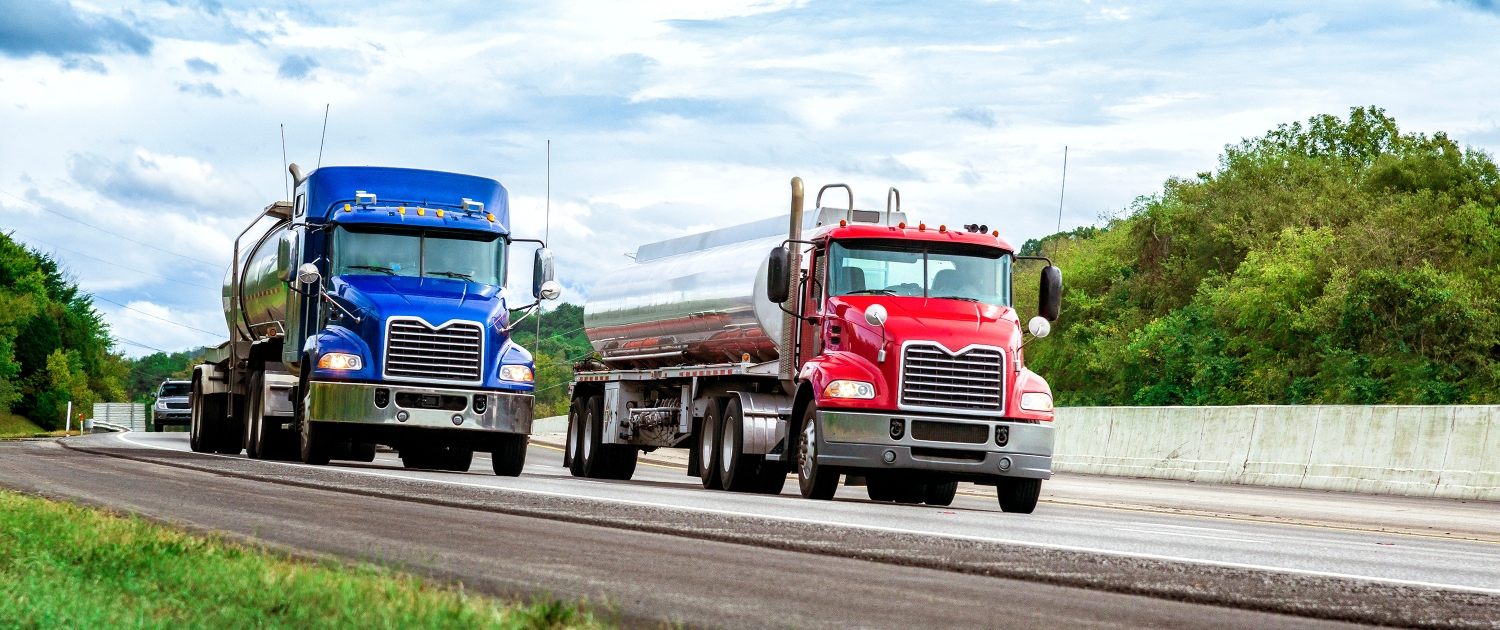
Small trucking company or large carrier? Every driver you ask will have their own opinion on which is better to work for. While there’s no one correct answer, there are pros and cons to each. Here’s what you need to know about small trucking companies vs large carriers, so you can make the best decision for you the next time you’re looking for a job.
Working for a Small Trucking Company

Pros
What drivers who work for a small trucking company probably like most about it is the fact that it’s, well, small. Drivers working for a small trucking company will often have more of a voice when it comes to operations, policies, and day to day management than they would if they worked for a large mega fleet.
Another perk about working for a small trucking company is the ability to do some things outside your normal job description of truck driving. While this is understandably not what all drivers are looking for, small trucking companies are a great place to learn new skills that will help you later in your career.
These skills could be anything from hauling different types of freight to learning the ins and outs of the financial side of the business. If you want to become an owner operator or even own your own fleet one day, this kind of experience is invaluable.
Cons
One of the biggest issues with driving for a smaller trucking company is the heightened chance that the business won’t succeed, and the driver will be left without a job. If the trucking industry goes through a rough time, it’s much easier for a larger carrier to weather that storm than it is for a smaller, mom and pop company.
Take for example what’s happened during the last few years. During and right after Covid, the number of small trucking companies and owner operators skyrocketed in response to the amount of freight that needed to be moved.
Times were good for a while, but with diesel rising to never-before-seen prices and supply chain issues still prevalent, these small operations found it hard to survive and many shut their doors. Unfortunately, this left any drivers working for these carriers out in the cold.
There’s also the chance that while working for a small company, they may begin to rely on you too much. While being part of a small team can be nice, you never want to feel like you’re being forced to take on too much because the boss doesn’t want to hire more drivers to help with the demand.
Working for a Large Carrier
Pros
In general, larger carriers will have more robust healthcare and savings plans than smaller companies. These plans include medical, dental, vision, and most of the time even life insurance. This means that you and your family will be better set up in the case of a health emergency or if some other issue arises. This isn’t to say that all smaller trucking companies won’t offer these benefits, just that on average, the plans won’t be as good.
Another benefit of working for a large carrier is their training and advancement programs. Generally, large carriers will have programs that help newer drivers, even those fresh out of CDL training, to get on the road by themselves safely and confidently.
While this benefit is mostly geared towards new drivers, seasoned truckers should also look for training and advancement opportunities when researching a new company to work for. Some carriers have paid endorsement training, management training programs, and even have courses on how to become a driver liaison.
Cons
Many drivers will cite feeling like “a number instead of a name” while working for a large carrier. This is because at a large carrier, you’re going to be one of a hundred, one of a thousand, or even ten thousand. You could work there for 10 years and still won’t get to know the owner of the company or have any say in the company’s direction. But if you’re just looking to drive and collect a paycheck, then this won’t be that big of a deal for you.
Larger carriers are also known for having tighter safety regulations and eyes on their drivers. One particularly divisive way they could do this is by using driver-facing cameras inside the cab. While measures like this can lead to safer driving, more experienced drivers may feel like they’re having someone breathing down their neck when it’s not needed.
It’s important for drivers who are looking for a new job to remember that every carrier is different and won’t always fit into one of these neat buckets just because they’re a small company or a large carrier. It’s important to do your homework while looking for a new job and ask the right questions when you’re speaking with a recruiter or hiring manager to see if you’ve found the right place for you.
Looking for a new CDL Job?
Drive My Way matches you with a job based on your preferences like pay, home time, touch level, and more.




 Wreaths Across America describes their overall mission in three simple words, “Remember, Honor, and Teach.” Remember our fallen U.S Veterans, honor those who have served, and teach your children the value of freedom.”
  In 1992, after finding his company had a surplus of wreaths after the holiday season, Morrill Worcester, owner of the Worcester Wreath Company made a large donation of 5,000 wreaths to Arlington National Cemetery. Worcester continued making donations like this for the next 15 years, and it eventually caught on to the point that thousands of other people wanted to join in on the good cause.
  While everybody can get involved with Wreaths Across America by donating a wreath, truck drivers are unique in their ability to help even more. Through their carrier, truck drivers can volunteer as drivers for Wreaths Across America, transporting wreaths to locations where their events are held.
 If you were to ask truck drivers where their
 Though getting a Class A CDL will open the
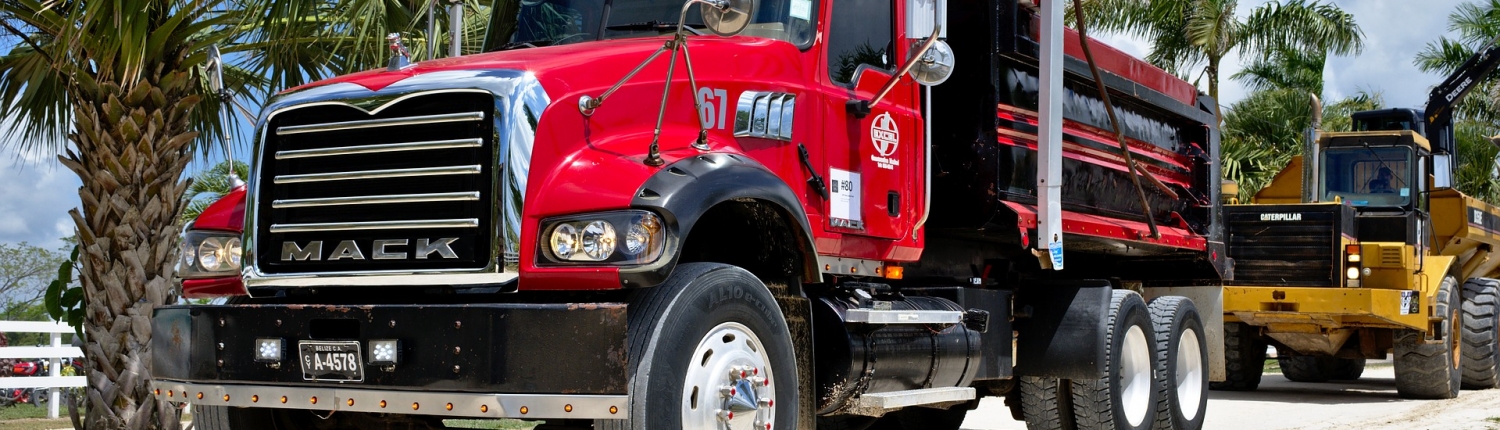
  With a Class B CDL, a trucker can drive any vehicles endorsed for Class B or Class C. Some of these vehicles are:
 To hold a Class B CDL, you only need to be 18 years old. This is actually true for a CDL A as well, but many companies will not hire
  If you’re a truck driver looking to stay close to home, a Class B CDL might be a great option for you, since most CDL B jobs only run locally. This means that if you’re planning on getting your Class B CDL, you should be prepared for jobs as a mover, delivery driver, bus driver, or
  As a truck driver who’s looking for a new job, there are a ton of factors to consider before making your decision. You’re probably thinking about your preferred range, what you
 Studies show that living in a
  While you won’t be able to fix everything on your truck, having the right tools to tighten, straighten, or replace something in a pinch can be the difference between waiting hours for roadside assistance and getting back on the road in a matter of minutes.
  The importance of taking care of yourself on the road can’t be overstated. While most of the items on this list seem like common sense, it’s never a bad idea to double check to make sure you’re not missing anything important.
 For most drivers, their smartphone is all they need for entertainment when stopped for the night. But if you’re looking to spend less time on your phone, there are a number of options for entertainment that don’t involve your smartphone.
  Here are some other things you might want to add to your list.
 CBD (short for cannabidiol) is a compound found in cannabis plants like hemp and marijuana. There are over 113 such compounds in the cannabis plant, known as cannabinoids. The most well-known cannabinoids are CBD and THC (short for tetrahydrocannabinol).
  There are many CBD derived products that are available for use on the market. For example, CBD oil is made by extracting the compound from either hemp or marijuana plants. These products of course contain CBD, but other things as well, including trace amounts of THC.
 It’s important to remember that while marijuana and its derived products are becoming legalized in more and more states, it’s still illegal on the federal level. This means if you are drug tested using the federal drug testing panel and use CBD, it will be reported out as a positive drug test. The recent clearinghouse regulations mean that this test result data will be available to other employers in the trucking industry.
  So, what’s the bottom line for people wondering “can truck drivers use CBD?”