Professional truck drivers spend long hours behind the wheel, often working around demanding schedules, changing road conditions, and extended periods away from home. Over time, those realities can affect everything from physical comfort and energy levels to stress, sleep, and overall well-being.
Building healthier habits on the road does not necessarily require a complicated workout routine or a complete change in lifestyle. Small choices throughout the day can help drivers stay active, recover after long stretches of driving, and make their health a priority within the realities of the job.
At NFI Industries, driver wellness is supported through benefits and mental health resources as well as employee-led initiatives such as EVOLVE, an Employee Resource Group (ERG) that promotes wellness throughout the company. NFI’s approach offers several practical ideas that drivers can use to take better care of themselves on and off the road.
Why Driver Wellness Matters
Driving is a physically demanding job, even when much of the workday is spent sitting. Remaining in the same position for hours can contribute to stiffness and discomfort, particularly in the neck, shoulders, back, hips, and legs. Drivers may also be climbing in and out of the cab, handling equipment, completing inspections, or loading and unloading freight depending on the job.
Mental wellness also deserves the same attention. Long periods alone, irregular schedules, intense traffic and weather, delivery deadlines, and time away from family can all add stress to a driver’s workday.
As Samantha Maronski, Vice President of NFI’s EVOLVE, explains:
“At NFI, we recognize that life on the road presents unique mental and physical demands, from long hours behind the wheel to being away from family. We prioritize driver wellness by offering comprehensive benefits, accessible mental health resources, and employee assistance programs specifically designed to support life on the move. Beyond formal programs, we foster a supportive culture where drivers know they are backed by a team that genuinely cares about their safety, well-being, and overall health every mile of the journey.”
Drivers might not be able to control every part of the job, but developing routines around movement, food, hydration, rest, and recovery can make it easier to manage some of its everyday demands.
How NFI’s EVOLVE ERG Encourages Healthy Habits
One way NFI promotes wellness is through EVOLVE, an Employee Resource Group that connects employees across different roles and provides resources focused on personal and professional growth. For Samantha Maronski, Vice President of EVOLVE, that sense of connection is an important part of creating a workplace where wellness is actively supported.
“Resource groups like EVOLVE provide a community platform where employees across all roles, including drivers, can connect, share guidance, and access tools that empower their personal and professional growth. Creating a culture of wellness isn’t just about programs; it’s about making sure every employee feels valued, supported, and equipped to perform their best safely. When our people thrive physically and mentally, it strengthens our entire NFI Family.”
That focus continues throughout the year rather than being limited to a single initiative. As Sreya Hossain, EVOLVE’s Communications Lead, explains, “EVOLVE promotes wellness year-round through monthly calls, educational resources, and wellness challenges that encourage employees to build healthy habits.”
For drivers, one of those resources is EVOLVE’s “6 Simple Exercises for Truck Drivers” worksheet (pictured below), which focuses on movements that can be completed during ordinary stops throughout the workday. Rather than expecting drivers to find a gym or fit a lengthy workout into their schedule, the exercises use the truck, available space, or a seated position to make movement easier to incorporate while safely parked.
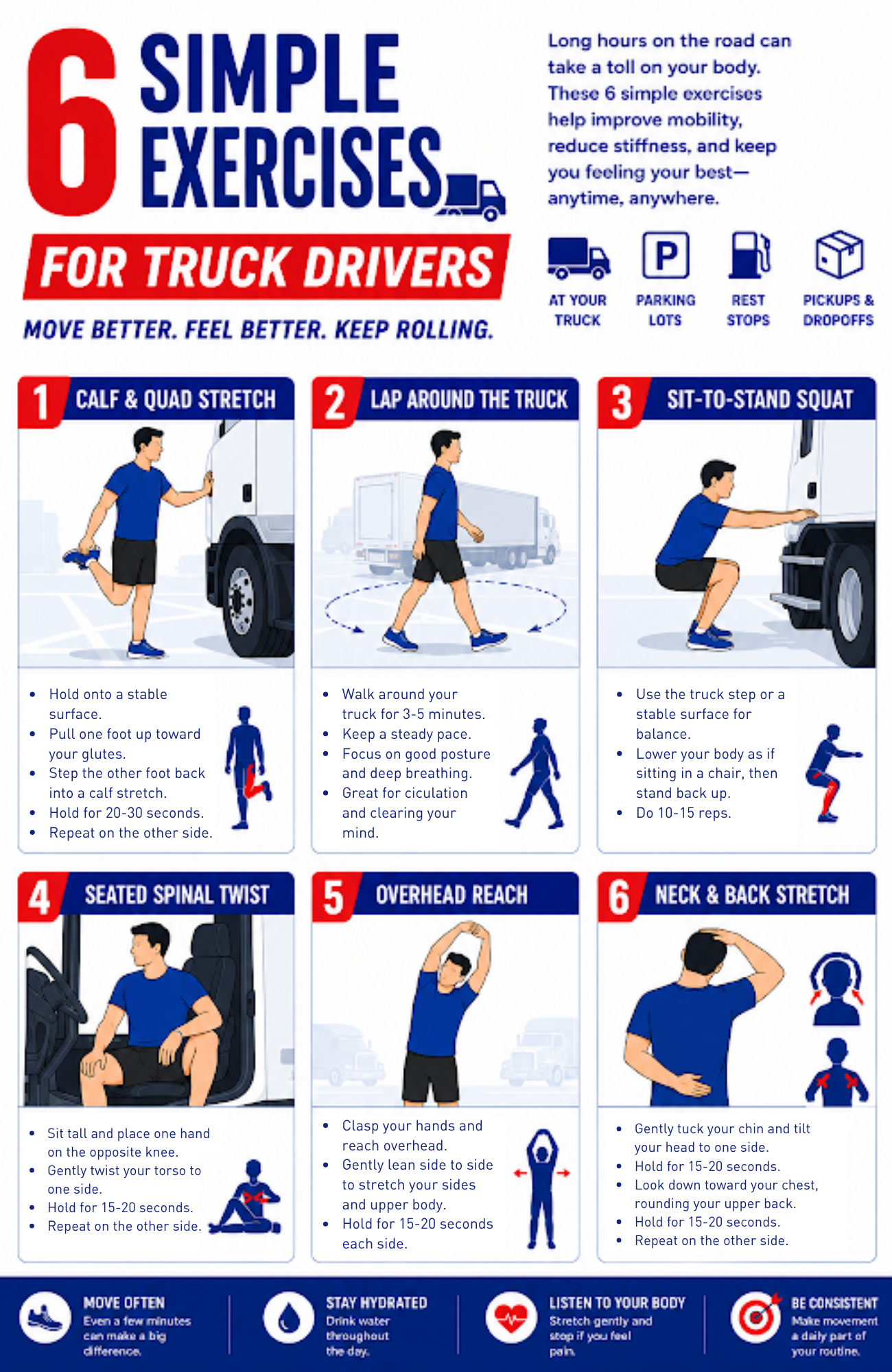
The six exercises include:
- Calf and quad stretch: Using a stable surface for balance, drivers can stretch the front of the thigh by gently pulling one foot toward the glutes and repeating on the other side.
- Lap around the truck: A three- to five-minute walk around the truck provides an opportunity to get moving after sitting behind the wheel. It can be completed during an appropriate stop while maintaining awareness of traffic and other activity nearby.
- Sit-to-stand squat: Using the truck step or another stable surface for balance, drivers can lower their body as if sitting in a chair and then stand back up for several repetitions.
- Seated spinal twist: While sitting tall, drivers can gently twist their torso to each side to stretch the back after an extended period in the driver’s seat.
- Overhead reach: Clasping the hands and reaching overhead, followed by a gentle lean to either side, can help stretch the sides and upper body.
- Neck and back stretch: Gentle neck movements followed by rounding the upper back can help release some of the tension that develops from maintaining a driving position for long periods.
The worksheet is intentionally simple. Each movement requires little or no equipment and can be completed in a few minutes at a safe stopping location, making it easier for drivers to add movement to a workday that otherwise involves significant time sitting.
Everyday Wellness Tips for Truck Drivers
Exercise is one part of staying healthy on the road, but wellness is also shaped by the choices drivers make throughout the day. NFI recommends focusing on small, consistent habits that can realistically fit into a driver’s routine.
- Use stops as opportunities to move. A fuel stop, rest break, or time at a customer can provide an opportunity to walk or stretch when conditions allow. Even five to ten minutes of movement can help drivers loosen the neck, back, shoulders, and legs after spending hours behind the wheel.
- Keep water within reach. Having a reusable water bottle in the cab makes hydration easier throughout the day. NFI encourages drivers to prioritize water rather than relying heavily on sugary or highly caffeinated drinks, especially when reaching for another beverage has become an automatic part of a long shift.
- Plan ahead for meals and snacks. Truck stops and fast-food restaurants are convenient, but they do not have to be the only option. Packing foods such as fruit, nuts, and high-protein snacks gives drivers alternatives when healthier choices are limited along a route. Preparing a few options before leaving home can also reduce the pressure to make every food decision while tired or pressed for time.
- Protect rest and recovery. Quality sleep is especially important for professional drivers, and creating a comfortable sleep environment in the cab can make rest periods more effective. Short periods of intentional downtime can also give drivers a chance to mentally reset before getting back on the road.
- Give your eyes and mind a break from screens. It can be tempting to spend an entire break scrolling on a phone, particularly after hours alone in the cab. NFI recommends limiting some screen time during breaks so the eyes and mind have an opportunity to recharge.
For more trucking industry tips and tricks, be sure to stay up-to-date on our Truck Driver Blog and connect with us on social media.