
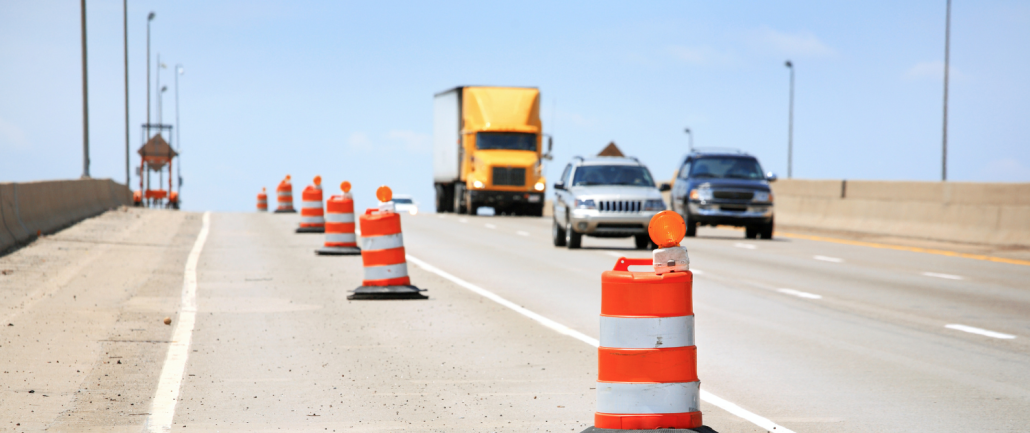
 Road construction season brings lane closures, shifting traffic patterns, reduced speed limits, and unexpected delays.
For truck drivers, those changes can create challenges that require extra attention behind the wheel. Narrow lanes, merging traffic, uneven pavement, and sudden slowdowns leave less room for error, especially when operating a large commercial vehicle.
A fully loaded truck needs more distance to stop and more space to maneuver than a passenger vehicle. Staying alert and adjusting your driving habits before entering a work zone can help keep you, road crews, and other motorists safe.
Slow Down Before You Enter the Work Zone
One of the easiest ways to improve safety in a construction zone is to reduce speed early.
Waiting until you reach cones or barriers to slow down often leads to hard braking and sudden reactions from surrounding traffic. Instead, try to begin adjusting your speed when you see advance warning signs.
Driving a few miles per hour slower can provide:
- More time to react to changing traffic conditions
- Better control on uneven pavement
- Additional stopping distance if traffic slows unexpectedly
- More room to navigate narrow lanes
Remember that work zone speed limits are often lower for a reason. Crews may be working nearby, traffic patterns may have changed, or lane widths may be reduced.
Increase Following Distance
Following distance becomes even more important in construction zones.
Traffic may stop suddenly because of a lane closure, merging vehicles, equipment entering the roadway, or congestion farther ahead. Leaving extra space between your truck and the vehicle in front of you gives you more options if conditions change.
If visibility is reduced because of curves, barriers, dust, or heavy traffic, increase that distance even further. A few extra seconds of space can help prevent hard braking situations and reduce the risk of a rear-end collision.
Expect Lanes to Be Narrower
Many work zones reduce lane widths to create room for crews and equipment. This can be uncomfortable for any driver, especially on busy interstates where passenger vehicles continue to travel close to large trucks. Maintaining a steady position in your lane becomes even more important.
Some helpful reminders include:
- Keep both hands on the wheel whenever possible
- Avoid unnecessary lane changes
- Watch mirrors frequently
- Stay centered within the lane markings
- Be mindful of barriers, cones, and construction equipment
Remember that small steering corrections are usually safer than sudden movements.
Watch for Changing Traffic Patterns
A route you’ve driven hundreds of times may look completely different if it’s undergoing construction.
Temporary lane shifts, crossover traffic patterns, relocated exits, and new signage can appear with little warning. Drivers who rely on memory instead of signs often find themselves making last-second decisions. It’s helpful to treat every work zone as if it’s your first time driving through it.
Try to pay close attention to:
- Orange construction signs
- Digital message boards
- Temporary pavement markings
- Flaggers directing traffic
- Detour instructions
Merge Early and Predictably
When a lane closure is approaching, you should always start planning ahead.
Large trucks need more space and more time to merge safely. Waiting until the last second can create unnecessary stress and increase the risk of conflict with other drivers.
As soon as you see signs indicating a lane reduction:
- Check mirrors and surrounding traffic.
- Signal well in advance.
- Merge smoothly when a safe opening appears.
- Maintain a consistent speed whenever possible.
Predictable driving helps everyone around you react appropriately.
Eliminate Distractions
Construction zones are not the place to check a message, adjust navigation settings, or search for something in the cab.
The conditions ahead can change within seconds. A vehicle may stop unexpectedly. Workers may be present near the roadway. Traffic may suddenly merge into fewer lanes. The fewer distractions you have, the faster you can respond if something changes.
Before entering a work zone:
- Finish any needed GPS adjustments
- Secure loose items
- Put away your phone
- Focus entirely on driving conditions
Give Road Crews Extra Space
Remember that construction workers often spend their entire day just feet away from moving traffic.
While drivers may only spend a few minutes in a work zone, crews are exposed to those conditions for hours at a time. Respecting reduced speed limits and staying within your lane helps create a safer environment for everyone. If you see workers near the roadway, try to make an extra effort to maintain space and avoid unnecessary lane movements.
Plan for Delays
Work zones can affect delivery schedules, appointment times, and available driving hours.
Before heading out, check your route for known construction projects and factor potential delays into your planning. Accounting for extra travel time can help reduce pressure throughout the day and make it easier to approach work zones with patience and caution.
For more trucking industry tips and tricks, be sure to stay up-to-date on our Truck Driver Blog and connect with us on social media.