
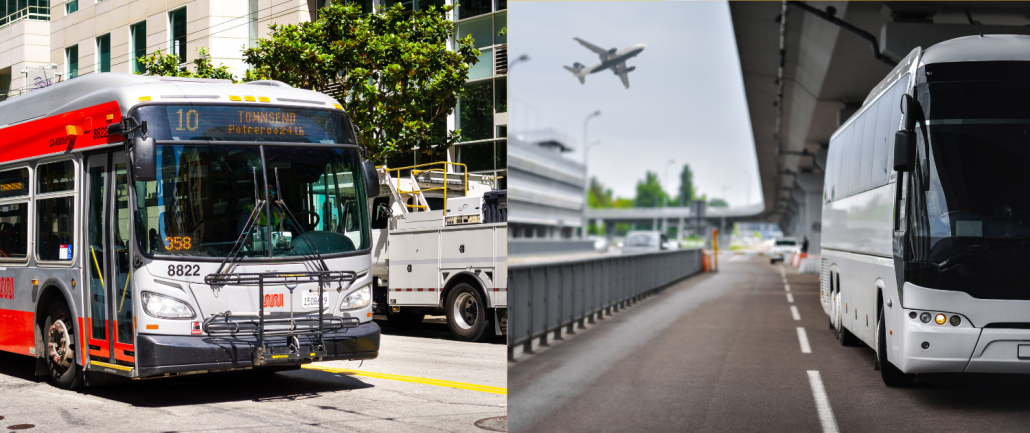
Passenger transportation offers several career paths for CDL drivers, but the day-to-day work can look very different depending on the type of vehicle and route. Transit bus drivers and motorcoach drivers both transport passengers professionally, yet their schedules, routes, customer interactions, and time away from home can vary considerably.
For drivers considering a passenger endorsement or looking for a change from freight, understanding those differences can make it easier to decide which type of driving job is the better fit.
Overview: Passenger Driving Careers Explained
Both transit bus drivers and motorcoach drivers are responsible for operating large passenger vehicles safely, following applicable traffic and transportation regulations, assisting passengers when necessary, and keeping their vehicles on schedule.
The biggest difference is generally the type of transportation being provided. Transit drivers usually operate public transportation routes within a city or metropolitan area, while motorcoach drivers are more likely to transport groups between cities, tourist destinations, airports, hotels, events, or other longer-distance locations.
Most positions require a CDL with a passenger endorsement, and some employers may also require an air brake endorsement depending on the equipment. Training requirements can vary by employer and state.
What Transit Bus Drivers Do
Transit bus drivers typically work for municipal transit authorities, regional transportation agencies, or private companies contracted to operate public bus service. They follow established routes with designated stops and usually operate within the same city or surrounding communities each day.
A transit driver’s shift can involve making dozens of stops, navigating busy intersections, driving through residential and commercial areas, and regularly dealing with pedestrians, cyclists, construction, and heavy local traffic.
Drivers also need to pay close attention to schedules because passengers often depend on buses to connect with trains, other bus routes, workplaces, schools, medical appointments, and other destinations.
Depending on the transit system, drivers may also assist passengers with accessibility equipment, answer questions about stops or routes, monitor fare collection, and communicate with dispatch about delays, detours, incidents, or mechanical problems.
What Motorcoach Drivers Do
Motorcoach drivers usually operate larger highway-oriented buses designed for longer trips. These vehicles commonly include luggage compartments, reclining seats, climate control, and other amenities intended for passengers traveling longer distances.
Motorcoach work can include charter trips, sightseeing tours, casino trips, airport transportation, sporting events, corporate travel, college athletics, scheduled intercity service, or group tours.
Unlike transit drivers who repeatedly follow the same stops throughout a shift, motorcoach drivers may travel to unfamiliar cities or destinations and spend considerably more time driving on highways.
They may also be responsible for loading and unloading baggage, coordinating with tour leaders or group organizers, confirming passenger counts, planning appropriate stopping locations, and keeping the trip moving according to an itinerary.
Key Differences in Routes and Driving Style
Transit driving is generally concentrated in urban and suburban environments. Drivers frequently have to accelerate, brake, merge, change lanes, pull into bus stops, and maneuver through tight streets while watching for passengers approaching or leaving the vehicle.
Because the routes are established, experienced transit drivers often become very familiar with particular neighborhoods, intersections, traffic patterns, and common problem areas.
Motorcoach driving usually involves longer stretches between stops. Highway driving may make up a significant portion of the job, although drivers still need to navigate hotel entrances, downtown streets, event venues, parking areas, and unfamiliar destinations.
The two jobs therefore require fairly different driving rhythms. Transit drivers constantly manage activity around the vehicle, while motorcoach drivers may spend longer periods maintaining safe highway speeds before navigating a new destination.
Schedule and Home Time Differences
For many drivers, the schedule is one of the most important differences between these careers.
Transit drivers usually begin and end their shifts within the same service area, making daily home time common. However, public transit systems often operate early in the morning, late at night, on weekends, and on holidays. New drivers may have less control over their schedules until they gain seniority.
Some transit operations use split shifts, where a driver works during the morning rush, has several unpaid hours between assignments, and returns for the afternoon or evening rush.
Motorcoach schedules can be less predictable because they depend on the trips booked by the company. A driver may handle a local charter one day and an overnight trip several states away the next.
Certain motorcoach positions provide regular local or regional routes, while others involve frequent hotel stays, weekends away, extended tours, or seasonal periods of heavy travel. Drivers considering motorcoach work should ask employers how often overnight trips occur and how schedules are assigned.
Passenger Experience and Customer Interaction
Passenger interaction is an important part of both jobs, although the nature of that interaction is different.
Transit drivers may transport hundreds of individual passengers throughout a shift. Most interactions are brief and involve questions about stops, fares, transfers, accessibility, or service disruptions.
Because transit buses serve the general public, drivers may also encounter passengers who are confused, upset, disruptive, or experiencing an emergency. Remaining calm and following company procedures is an important part of the position.
Motorcoach drivers generally spend more time with the same passengers. A charter group might remain together for several hours or several days, which can make the driver a more visible part of the overall travel experience.
Drivers may answer questions about the itinerary, assist with baggage, coordinate departure times, and communicate with tour guides, coaches, teachers, event organizers, or other group leaders.
For someone who enjoys customer service and engaging with passengers, motorcoach work can offer more opportunity for sustained interaction. Transit driving may appeal more to drivers who prefer shorter, more routine exchanges.
Pay and Career Growth Comparison
Pay varies considerably in both fields based on location, employer, experience, union representation, schedule, and the type of service being provided.
Transit agencies often offer structured wage scales with scheduled increases based on seniority or years of service. Many public transit positions also include benefits such as health insurance, retirement plans, paid leave, overtime opportunities, and union representation.
Motorcoach compensation can be structured differently depending on the company. Drivers may be paid hourly, by the day, by the mile, or through a combination of methods. Some positions also include gratuities from charter groups or tour passengers, although drivers should not assume tips will make up a predictable portion of their income.
Career advancement can also look different in each position. Experienced transit drivers may move into dispatch, training, supervision, safety, or operations management. Motorcoach drivers may qualify for higher-profile charter assignments, longer tours, specialized clients, driver training, dispatch, or management positions.
When comparing job offers, drivers should look beyond the advertised hourly rate and consider guaranteed hours, overtime rules, paid waiting time, benefits, overnight compensation, and how consistently work is available throughout the year.
Which CDL Passenger Career Is Right for You?
Transit bus driving may be a strong fit for someone who wants to stay within a local service area, prefers established routes, and values regular home time. Drivers should also be comfortable with frequent stops, dense traffic, large numbers of passengers, and schedules that may include nights, weekends, or split shifts.
Motorcoach driving may appeal to drivers who enjoy highway travel, changing destinations, charter groups, and longer trips. The tradeoff is that schedules can involve more nights away from home and greater variation from week to week.
Before accepting either type of position, be sure to ask employers about route assignments, training, scheduling, overtime, benefits, overnight travel, vehicle types, and how new drivers receive their initial assignments.
Both careers offer experienced CDL drivers the opportunity to move into passenger transportation, but the better choice depends largely on the type of schedule, driving environment, and passenger interaction you want from your next job.
For more trucking industry tips and tricks, be sure to stay up-to-date on our Truck Driver Blog and connect with us on social media.